



Working Principle Of Brushless Excitation Motor
A brushless excitation motor is a high-tech synchronous machine that doesn't need carbon brushes or slip rings because it uses an AC exciter on the shaft and a spinning rectifier unit to send field current straight to the rotor. This creative design solves important problems in the industrial world, like the contamination of carbon dust, the risk of sparks in explosive environments, and the high costs of regular brush maintenance and slip ring resurfacing. This makes it an essential tool for tough jobs in petrochemical plants, mines, and power plants.
What Is a Brushless Excitation Motor?
Core Components and Architecture
A brushless excitation motor is made up of a few important parts that work together to make it run without sparks and with little maintenance. The main power windings are in the stator. They combine with the magnetic field of the rotor to make force. In contrast to usual designs, the rotor has a small AC generator on the same shaft. This is called the exciter armature. The exciter armature makes AC power, which is then changed to DC by a spinning rectifier bridge. This power then goes to the main field winding without any moving contacts. Automatic Voltage Regulators (AVRs) keep an eye on the output voltage and change the excitation levels to keep things stable. This makes sure that the motor always works well, even when the load changes.
Comparison with Traditional Designs
Carbon brushes and slip rings are used in traditional motors to move electricity to the rotor. These mechanical links cause friction, which in turn makes heat and carbon dust that can get into insulation systems and cause them to fail early. The brushless induction motor, on the other hand, doesn't have any of these parts, so it needs much less upkeep and is more reliable. For buying teams in charge of big industrial projects, this design benefit directly means lower total cost of ownership.
Why It Matters for Industrial Applications
Brushless sparking motors work best in continuous-duty situations where safety and dependability are very important. The spark-free operation is good for petrochemical EPC workers, producers of explosion-proof equipment, and drilling service companies because it meets strict safety standards in Zone 1 and Zone 2 settings. In places like mines and cement mills, where dusty conditions would make traditional brushes wear out faster, brushless designs last longer and require less maintenance.
Working Principle of Brushless Excitation Motor
How the Exciter Armature Generates Field Current
The AVR powers the exciter stator, which is the first part of the working principle. This part, which doesn't move, makes a magnetic field that spins and causes an AC voltage to flow through the exciter armature that is attached to the rotor shaft. Three-phase AC power is made when the exciter armature cuts through this magnetic field as the rotor spins. The AC output is then sent to the spinning rectifier bridge, which is a small group of diodes that change AC to DC without using brushes or slip rings.
Role of the Rotating Rectifier Assembly
The rectifier bridge that spins with the rotor is attached directly to the shaft of the rotor. It is made up of several large diodes that are set up to handle the exciter's AC output and turn it into a smooth DC current. This direct current powers the main field winding, which makes the magnetic field that the synchronous motor needs to work. Since there are no moving contacts, there is no wear, no sparks, and no upkeep needed for power transfer. This is a huge benefit for businesses that work in dirty or dangerous settings.
Control and Regulation Through the AVR
The Automatic Voltage Regulator checks the output voltage of the motor all the time and compares it to a reference setpoint. When the load changes, the AVR quickly changes the amount of excitation current going to the exciter stator. This keeps the voltage stable within ±0.5% to ±1% of the rated output. In places like compressor drives and pump systems, where quick changes in load can cause voltage drops and equipment to trip, this fast instantaneous reaction is a must.
Advantages Over Slip Ring Systems
Maintenance needs to be done on slip ring systems on a regular basis to resurface rings, replace brushes, and clean up carbon dust that has built up. These jobs are not needed at all with brushless designs, which cuts down on labour costs and increases the time between planned shutdowns. Not having any mechanical links also makes electromagnetic compatibility (EMC) better, which lowers electromagnetic interference (EMI), which can mess up modern industrial plants' sensitive control systems.
Advantages and Efficiency of Brushless Excitation Motors
Operational Benefits That Lower Total Cost
The brushless excitation motor cuts down on upkeep and downtime by a large amount. If there aren't any brushes or slip rings to replace, repair workers can focus on more useful jobs instead of replacing the same parts over and over again. This benefit is especially useful for maintenance work that needs to be done in remote places, like offshore platforms and mining sites, which are expensive and hard to get to. The cost of maintenance can be cut by up to 60% over a typical 15-year service life compared to older designs.
High ratings for efficiency, usually IE4 class or higher, mean that you can see how much energy you're saving. When 400kW to 15000kW motors are running constantly, they can cut the amount of energy used each year by 15% to 20% compared to older types. Because these savings add up over time, brushless excitation motors are a good choice for procurement teams that want to save money.
Enhanced Reliability and Service Life
By getting rid of brushes and slip rings, the main parts of standard motors that wear out, the service life is greatly increased. In places like mines and cement mills, where gritty dust speeds up wear, brushless systems can work for decades with little maintenance. The low amounts of noise and shaking also make linked equipment less stressed, which extends the life of the system as a whole.
Safety in Hazardous Environments
Because of the flammable gases and dust that are present, petrochemical plants, oilfield installations, and coal mines have to follow strict safety rules. The brushless stimulation motor doesn't make any electrical sparks when it's working normally, so it can be used in Zone 1 and Zone 2 dangerous environments. Because of this safety feature, there is no need for expensive explosion-proof shelters around the motor. This makes installation easier and lowers the cost of capital.
Proven Performance Across Critical Industries
Many important industries depend on brushless excitation motors to do their jobs. Power companies use them to run big Generators, and the security of the grid is directly affected by how well the power is controlled and how reliable the generators are. Marine and remote systems that are resistant to rust and need less upkeep in tough ocean settings are better off. Data centers and hospitals depend on brushless-excited standby generators to keep the power on during emergencies, when even short power outages can be very bad.
Types of Brushless Excitation Motors and Their Applications
Synchronous Excitation Motors
Synchronous excitation motors keep their speed fixed even if the load changes. This makes them perfect for situations where precise speed control is needed. These motors are commonly used in ball mills, SAG mills, and rotating kilns, where a steady spinning speed makes sure that the quality of the product is the same. Changing the power factor gives places more options, so they can use reactive power more efficiently and save money on energy costs.
Permanent Magnet Excitation Types
High-energy rare-earth magnets are used in permanent magnet versions to make the rotor field. This gets rid of the need for field windings and makes construction even easier. These styles are the most efficient and take up the least amount of room, so they can be used in places where space is limited. But they can only be used in smaller power ranges and situations where field weakening is not needed.
Rotating Rectifier Designs
In medium and large industrial settings, rotating rectifier brushless excitation motors are the most common type. Strong construction and a history of dependability make them able to handle power levels from 400kW to 15000kW. Manufacturers make models that meet IEC and GB standards. They come with security grades from IP00 to IP55 to fit a variety of environments. Different temperature control needs can be met by cooling ways like IC01, IC37, and IC81W.
Selection Framework for Procurement Teams
Choosing the right type of motor requires careful thought about a number of things. The size and shape of the motor depend on how much power it needs to handle. Rotating rectifier designs work well for uses ranging from 400kW to 15000kW. The type of location affects the choice of protection grade. For example, IP54 or IP55 shelters work best in dirty mine environments, while smaller protection grades may be better for clean indoor setups. Voltage needs between 3kV and 11kV must be compatible with the building's electricity system. You can choose from 20, 24, 30, 32, 36, 40, 48, 60 poles and speeds (100, 125, 150, 167, 187.5, 200, 250, 300 r/min) to perfectly match the needs of the driven equipment.
It is possible to get motors with or without drilled shafts. Air clutches work with drilled shaft motors to slowly engage them, while starting torque ratios of 1.7 for drilled shaft motors and 2.0 for pull-out torque ratios at rated voltage for non-drilled shaft motors make them easier to start. This gives buying teams the freedom to choose the best motor for each starting and moving situation.
Maintenance Tips and Procurement Considerations
Routine Inspection Protocols
Even though brushless excitation motors don't need much maintenance, they should still be inspected on a regular basis to make sure they're working at their best and to find problems early. Visual checks should be done every three months to look for strange noises, vibrations, and temperature changes in the bearings. Testing the stator and rotor windings for insulation resistance once a year finds insulation weaknesses that are starting to show before they become serious. The rotating rectifier assembly uses diode reverse-bias leakage tests to find diodes that are getting old and could cause excitation loss.
By adjusting the spinning unit dynamically to G2.5 standards, vibration-induced wear is stopped and bearing life is increased. Full-load temperature rise tests make sure that cooling systems work right and that thermal limits aren't pushed too far. These proactive steps make the most of the decades-long service life that brushless excited motors can provide.
Supplier Evaluation Criteria
When choosing suppliers, people who work in procurement have to look at a number of factors. Experience in manufacturing is important. Companies that have been making things for 15 years or more have shown that they are technically competent. Regulatory compliance is ensured by certification packages that include IEC compliance, CE marking for European markets, and UL listing for sites in North America. Production capacity and wait times affect project plans. Suppliers who can deliver within three months of receiving advance payment help projects get finished on time.
Customisation tools are becoming more important as projects need solutions that are made just for them. Suppliers that offer ODM services can make motors that work with certain power levels, mounting arrangements (IM7311), and weather conditions. OEM contract manufacturing gives customers who need named goods or unique designs more options.
Bulk Ordering and Total Cost Optimization
Bulk orders can help large projects save money by getting better prices. When suppliers can make more than a few hundred thousand units a year, they can offer affordable prices and still meet quality standards for brushless excitation motors. When purchasing something, teams should look at not only the initial cost, but also the costs over its whole life, such as how much energy it uses, how often it needs to be maintained, and how long it is expected to last. Motors with an IE4 efficiency class or higher save energy over time, which makes up for their higher initial cost.
When choosing between OEM and reseller outlets, you need to think about price, wait time, and support. Most of the time, buying directly from the OEM gives you better pricing and access to technical support. On the other hand, buying from a distributor may give you faster delivery from local stock and easier logistics. Procurement teams can improve their supply chain strategy by understanding these trade-offs.
Quality Assurance and Testing Standards
Quality control methods that are fully in line with IEC 60034-1 and IEEE 115 standards are used by reputable makers. As part of multi-stage testing, the insulation resistance of the stator and rotor is measured, the polarisation index is calculated, and the full-load temperature rise is confirmed. The AVR step-load reaction test shows that the voltage returns within a certain number of milliseconds. Full factory inspection records show that certain standards were met, giving customers peace of mind that the motors they receive will work as expected.
Conclusion
Understanding the working principle of brushless excitation motors empowers procurement professionals to make informed decisions that optimize operational efficiency and reliability. The elimination of brushes and slip rings delivers tangible benefits, including reduced maintenance costs, enhanced safety in hazardous environments, and extended service life. Available in power ranges from 400kW to 15000kW with diverse configuration options, brushless excitation motors serve critical applications across petrochemical processing, mining, power generation, and oilfield services. By carefully evaluating supplier capabilities, customization options, and lifecycle costs, B2B procurement teams can secure motor solutions that deliver lasting value and competitive advantage.
FAQ
1. What distinguishes a brushless excitation motor from brushed designs?
The fundamental difference lies in how field current reaches the rotor. Brushed motors use carbon brushes and slip rings—mechanical contacts that wear over time and require regular maintenance. Brushless designs employ a shaft-mounted exciter and rotating rectifier to deliver field current without any sliding contacts, eliminating wear, sparking, and maintenance requirements.
2. How does brushless excitation enhance generator performance?
Brushless excitation provides faster voltage regulation response through electronic AVR control, maintaining output voltage within ±0.5% during load changes. The absence of brush voltage drop improves overall system efficiency, while eliminated maintenance downtime increases availability for critical power generation applications.
3. What should procurement teams prioritize when specifying motors for large projects?
Key specifications include power range (400-15000kW), voltage grade (3kV-11kV), speed requirements (100-300 r/min), and protection grade (IP00-IP55) matching environmental conditions. Starting method—direct full-voltage or soft start—affects electrical infrastructure requirements. Drilled versus non-drilled shaft selection impacts starting torque capability and clutch integration requirements.
Partner with SYSX MOTOR for Your Brushless Excitation Motor Requirements
SYSX MOTOR, operating through Tellhow Shenyang Electric Machine Co., Ltd., brings over 15 years of specialized manufacturing experience to serve petrochemical EPC contractors, explosion-proof equipment suppliers, mining operations, and oilfield service providers throughout North America. Our brushless excitation motor portfolio spans 400kW to 15000kW with comprehensive voltage options from 3kV to 11kV, meeting IEC and GB standards with CE, UL, and VDE certifications for seamless global deployment. We deliver customized solutions within three months, supported by dedicated technical consultation, comprehensive testing documentation, and responsive after-sales service. Contact our team at sxmotor@yeah.net to discuss your specific requirements with an experienced brushless excitation motor supplier committed to optimizing your procurement outcomes.
References
1. Sen, P. C. (2021). Principles of Electric Machines and Power Electronics. Third Edition. John Wiley & Sons, Hoboken, New Jersey.
2. Chapman, S. J. (2020). Electric Machinery Fundamentals. Sixth Edition. McGraw-Hill Education, New York.
3. Boldea, I., & Nasar, S. A. (2019). Synchronous Generators: The Electric Generators Handbook. Second Edition. CRC Press, Boca Raton, Florida.
4. IEEE Power & Energy Society (2018). IEEE Standard 115: Guide for Test Procedures for Synchronous Machines Including Acceptance and Performance Testing. Institute of Electrical and Electronics Engineers, New York.
5. International Electrotechnical Commission (2017). IEC 60034-1: Rotating Electrical Machines – Part 1: Rating and Performance. IEC Central Office, Geneva, Switzerland.
6. Lyshevski, S. E. (2020). Electromechanical Systems, Electric Machines, and Applied Mechatronics. CRC Press, Boca Raton, Florida.

USER EVALUATE
Here is the customer's evaluation of us
YOU MAY LIKE
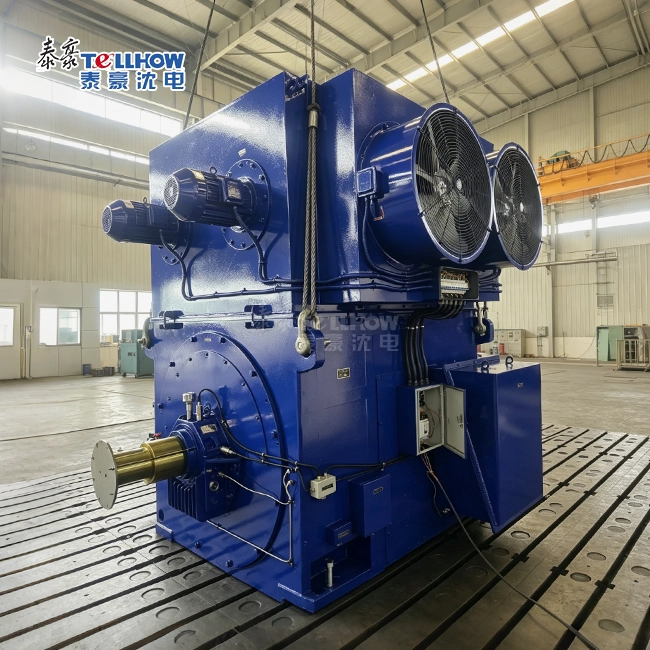 VIEW MOREUltra-high-speed motors
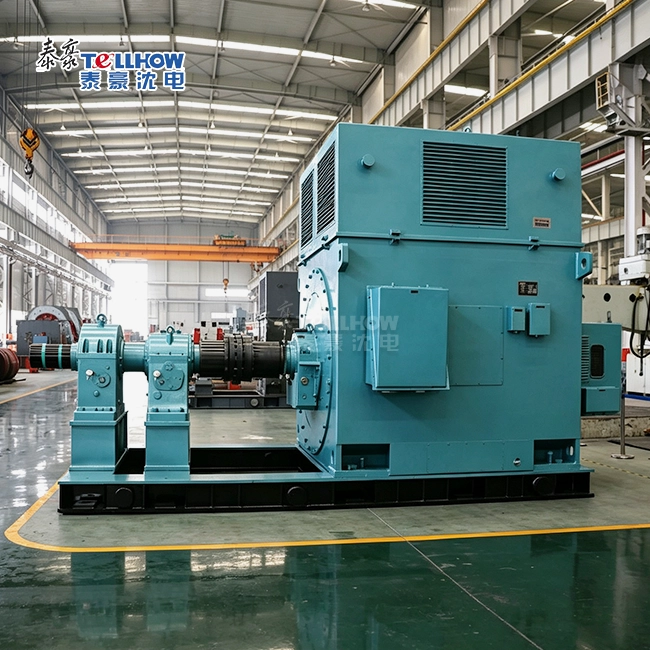 VIEW MOREopen type high voltage slip ring motor
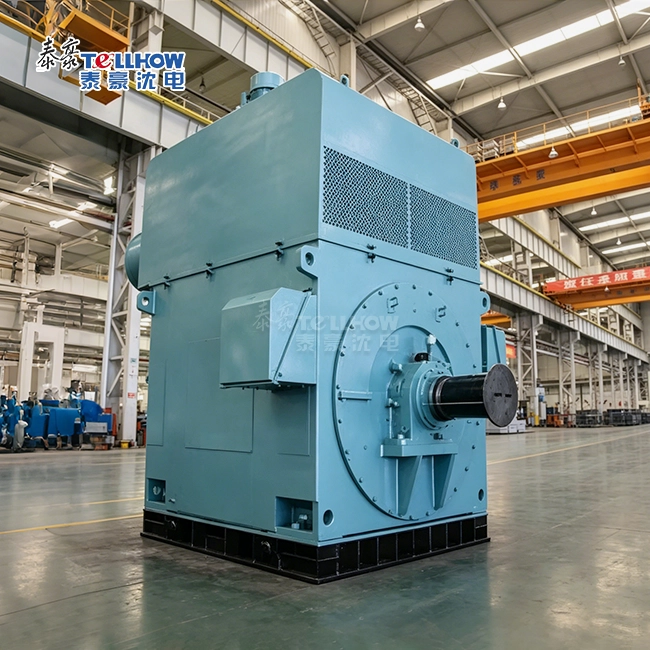 VIEW MOREair-water cooling slip ring motor
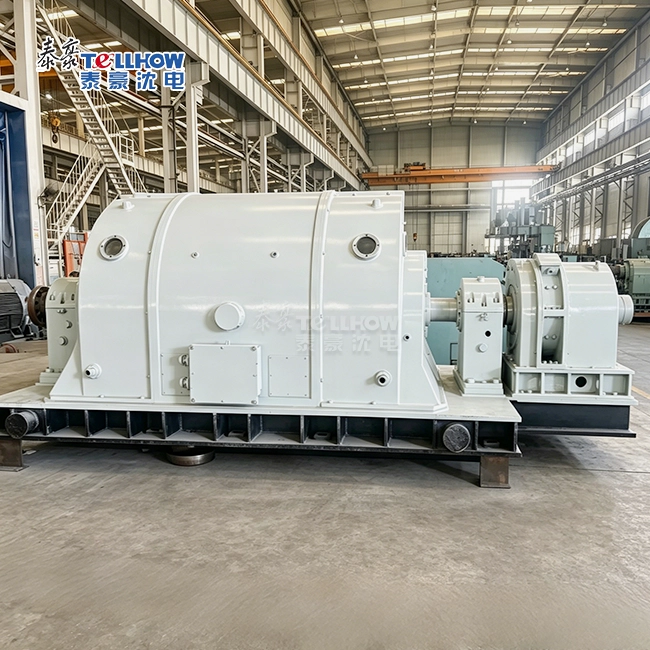 VIEW MOREsecondary air fan motor
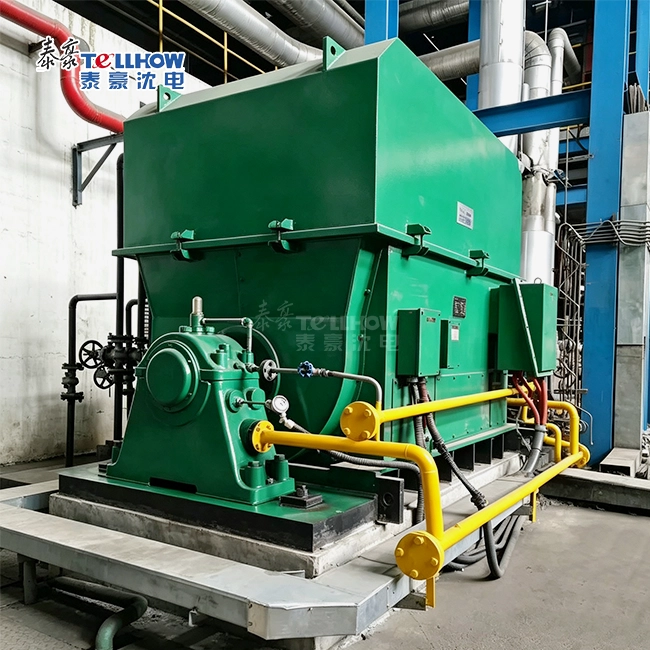 VIEW MOREhigh efficiency pump motor
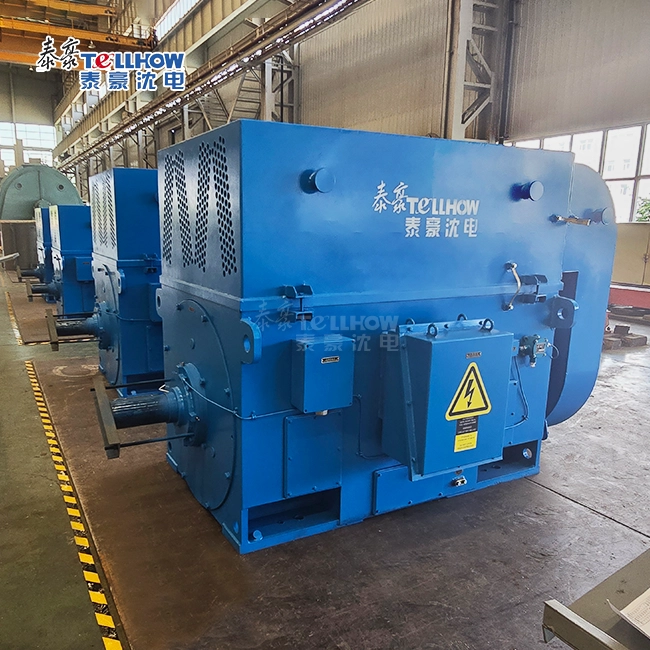 VIEW MOREprimary air fan motor
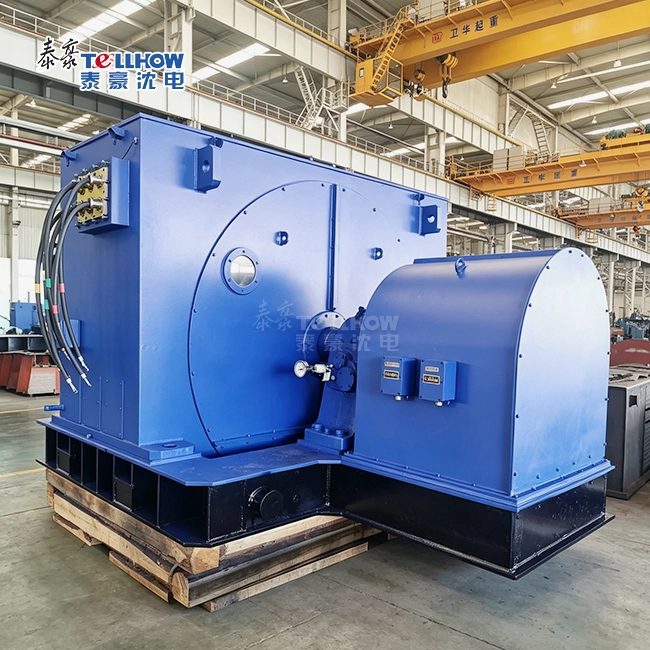 VIEW MOREReciprocating compressor synchronous motor
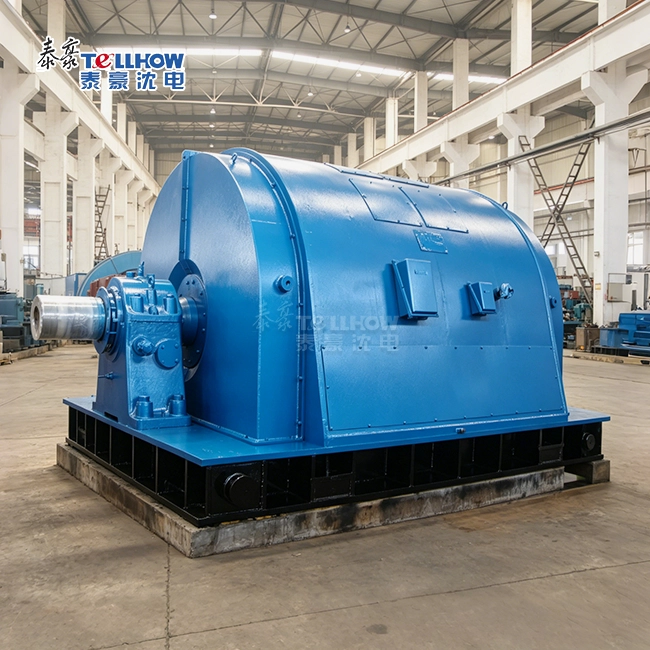 VIEW MORESintering blower motor